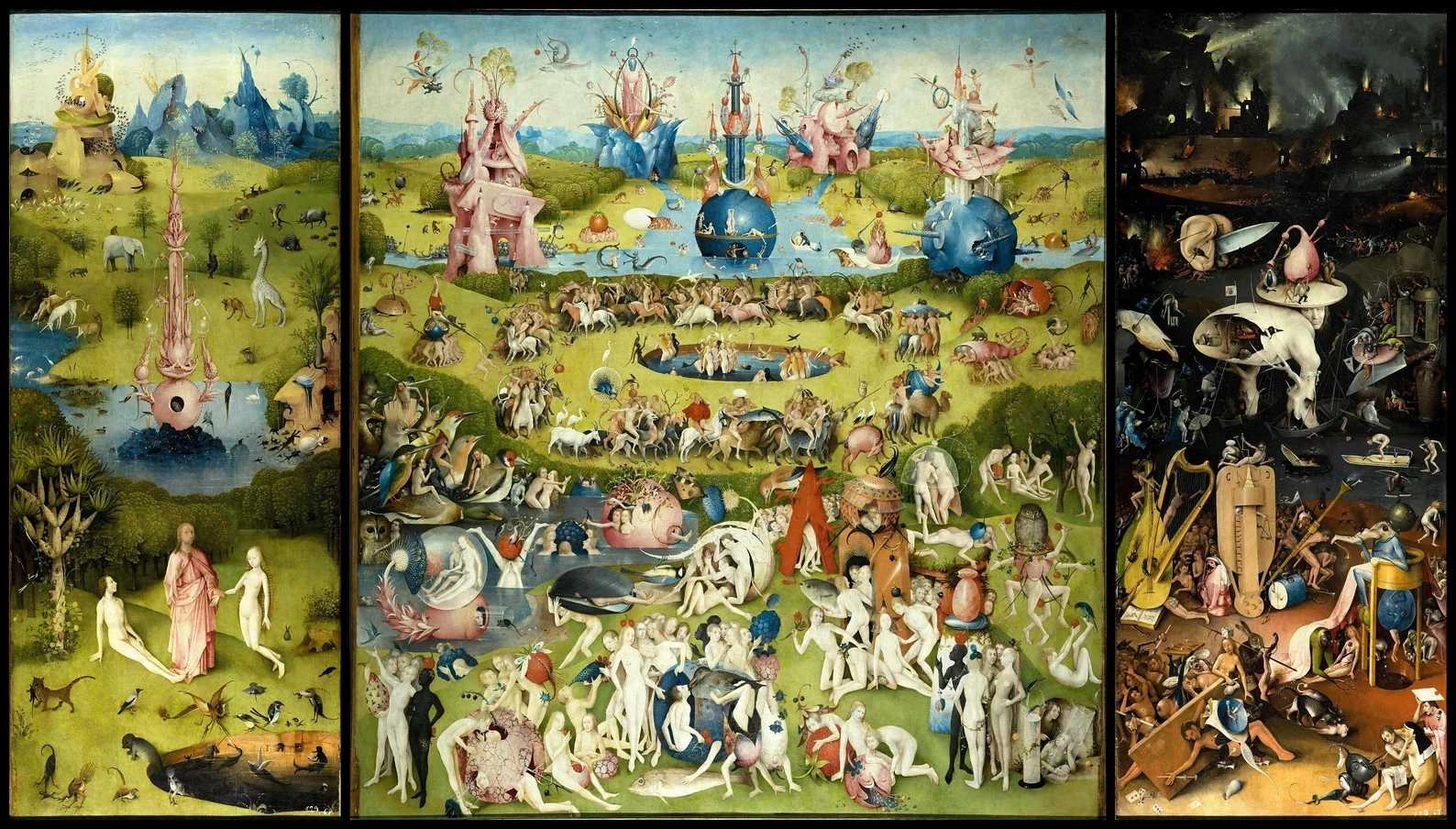
From the seeds contained in the triptych, one possibility emerges that cannot be dismissed: the birth of a laboratory beyond Earth, on Mars, conceived not as a refuge for humanity but as a refuge from humanity’s moral boundaries.
Freed from terrestrial treaties and from the scrutiny of international law, such a place could host what is forbidden on Earth. Underground structures, maintained by autonomous robots and artificial intelligence, would provide secrecy and continuity where the human body cannot endure. There, biological experiments banned by the Biological Weapons Convention could be re-enacted under the guise of adaptation to hostile environments. Genetic manipulation at the edge of ethics, gain-of-function research pushed beyond limits, or even the re-engineering of pathogens might be justified as “survival strategies” for future colonists.
The military dimension would not be absent. Mars could serve as a testbed for technologies outlawed on Earth: radiological dispersal systems, advanced neural weaponry through brain–machine interfaces, AI-driven autonomous defense systems. No witnesses, no oversight, only the silence of a planet repurposed as proving ground.
Philosophically, such a scenario would embody the ultimate Hybris: a space where humankind externalizes its darkest impulses, hiding them beneath the red soil of another world. What cannot be done under the sky of Earth might be “permitted” under the sky of Mars. Yet every action there would still be a mirror of human will, and the consequences would inevitably return home.
Thus the triptych acquires a shadow, its echo resonating in this speculative appendix. What was once a warning about weapons, illusions, and corporate power finds its culmination in the specter of a dystopian laboratory dominated by private interests — a place where humanity’s prohibitions are suspended, and where the future itself risks being rewritten in secrecy.