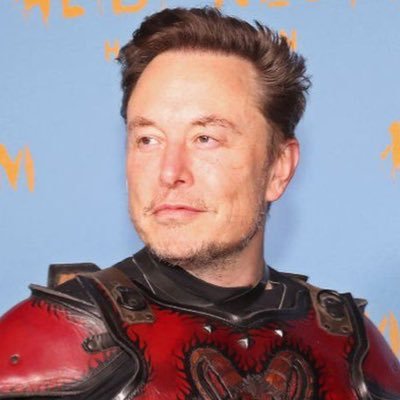
Elon Musk, we have a problem: your influence on the discourse about the future and how your personal ideologies might shape or derail our collective vision for it. The critique isn't merely about you as a wealthy tech mogul with eccentric ideas, but rather about how these ideas are impacting broader conversations on what the future should look like, potentially closing off alternative ways of thinking about it.
The Allure and Problematic Aspects of Elon Musk
Initially, Elon Musk was seen as a refreshing alternative to the typical Silicon Valley tech CEOs, who were more focused on social networks and smartphones. Musk's vision seemed to be rooted in tackling real-world challenges with innovative solutions: electric cars, space travel, solar energy, and AI advancements. His appeal was his ambition to create a future resembling science fiction, full of possibilities beyond the mundane updates of consumer technology.
However, this perception has shifted significantly over the years. Musk's stance during the COVID-19 pandemic and his support for controversial political figures like Donald Trump began to reveal a more complex and problematic ideology. His criticism of so-called “woke” culture and his determination to purchase and reshape Twitter illustrate his intent to control narratives that don't align with his views.
Musk's Vision and Technological Solutionism
Elon Musk embodies a philosophy known as “technological solutionism,” which posits that engineers and scientists should lead efforts to solve future problems by reducing them to calculations and mathematical axioms. This perspective tends to dismiss political and social issues as hindrances to technological progress. Musk, like other tech leaders, is driven by a belief that technological advancement is the paramount concern, often sidelining social and environmental considerations.
Longtermism: The Ideological Backbone
What distinguishes Musk from other tech moguls is his alignment with “longtermism,” an ideology that places equal moral weight on future generations as on those living today. Longtermism advocates prioritizing the mitigation of existential risks that could lead to the collapse of civilization or even human extinction. This perspective often prioritizes unlikely but catastrophic events (like asteroid impacts) over more probable but less existential threats (such as climate change), under the rationale that preventing total extinction is of utmost importance.
Prominent longtermists, like William MacAskill and Toby Ord, argue that human actions should be evaluated based on their potential to safeguard humanity's future over millennia. Musk supports this ideology and has invested in AI research and space colonization as ways to ensure humanity's long-term survival. However, his emphasis on colonizing Mars as a “backup” for Earth reflects a preference for technological solutions over current ecological transitions.
The Risks of a Narrow Vision of the Future
The critique of Musk's longtermism is not just about the potential misallocation of priorities but about how it might stifle broader conversations about our collective future. Longtermism has been described as a kind of millenarian sect, with Musk as a potential guru of a dangerous ideological cult, not because of his present-day views but due to his futuristic vision.
The danger lies in reducing the discourse on the future to Musk's vision, potentially dismissing other critical considerations and ideologies. For instance, works of fiction like Isaac Asimov's "Foundation" series and Iain M. Banks' "Culture" series, while influencing Musk, were fundamentally progressive and left-leaning, envisioning futures where knowledge preservation and AI serve humanity, not control it. These authors would likely find Musk's interpretation of their work overly simplistic and ideologically skewed.
Preserving Diverse Visions of the Future
A key concern is that Musk's domination of the long-term discourse could lead to a future designed predominantly by and for wealthy, white, Western men. If Musk's vision becomes the sole narrative, we risk neglecting more inclusive and diverse perspectives on the future. There is a need to balance consideration of existential threats with attention to current social and environmental issues, ensuring that discussions about the future include diverse voices and ideas.
Conclusion
The issue is not merely about Musk's current controversial actions or statements but about allowing his ideas to monopolize the conversation about humanity's future. Instead of focusing solely on technological advancements and long-term survival strategies, it's crucial to include discussions about social justice, climate change, and equitable progress. A singular focus on Musk's vision could lead to a future that reflects his narrow worldview rather than a holistic and inclusive one.
By broadening the scope of our discussions about the future, we can ensure that multiple perspectives are considered, allowing us to construct a more equitable and sustainable vision for all.