Medical Scitech
Science & Tech
Fighting online censorship, or, encryption's latest surprise use-case, with Mallory Knodel: Lock and Code S04E05
post photo preview

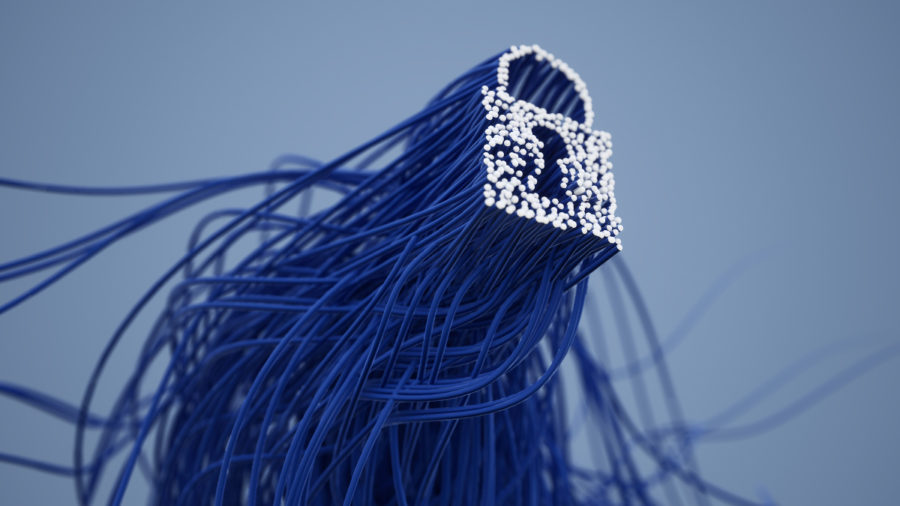
Government threats to end-to-end encryption—the technology that secures your messages and shared photos and videos—have been around for decades, but the most recent threats to this technology are unique in how they intersect with a broader, sometimes-global effort to control information on the Internet.

Take two efforts in the European Union and the United Kingdom. New proposals there would require companies to scan any content that their users share with one another for Child Sexual Abuse Material, or CSAM. If a company offers end-to-end encryption to its users, effectively locking the company itself out of being able to access the content that its users share, then it's tough luck for those companies. They will still be required to find a way to essentially do the impossible—build a system that keeps everyone else out, while letting themselves and the government in. 

While these government proposals may sound similar to previous global efforts to weaken end-to-end encryption in the past, like the United States' prolonged attempt to tarnish end-to-end encryption by linking it to terrorist plots, they differ because of how easily they could become tools for censorship. 

Today, on the Lock and Code podcast with host David Ruiz, we speak with Mallory Knodel, chief technology officer for Center for Democracy and Technology, about new threats to encryption, old and bad repeated proposals, who encryption benefits (everyone), and how building a tool to detect one legitimate harm could, in turn, create a tool to detect all sorts of legal content that other governments simply do not like. 

"In many places of the world where there's not such a strong feeling about individual and personal privacy, sometimes that is replaced by an inability to access mainstream media, news, accurate information, and so on, because there's a heavy censorship regime in place," Knodel said.  "And I think that drawing that line between 'You're going to censor child sexual abuse material, which is illegal and disgusting and we want it to go away,' but it's so very easy to slide that knob over into 'Now you're also gonna block disinformation,' and you might at some point, take it a step further and block other kinds of content, too, and you just continue down that path."

Knodel continued:

"Then you do have a pretty easy way of mass-censoring certain kinds of content from the Internet that probably shouldn't be censored."

Tune in today.

You can also find Lock and Code on Apple Podcasts, Spotify, and Google Podcasts, plus whatever preferred podcast platform you use.

Show notes and credits:

Intro Music: “Spellbound” by Kevin MacLeod (incompetech.com)
Licensed under Creative Commons: By Attribution 4.0 License
http://creativecommons.org/licenses/by/4.0/
Outro Music: “Good God” by Wowa (unminus.com)


Malwarebytes removes all remnants of ransomware and prevents you from getting reinfected. Want to learn more about how they can help protect your business? Get a free trial. TRY NOW.

community logo
Join the Medical Scitech Community
To read more articles like this, sign up and join my community today
0
What else you may like…
Posts
Articles
Cybersecurity basics & protection

The world of cybercrime is always changing. When viruses first appeared, most of them were pranks. To stay safe online, one of the best things you can do is stay educated on the litany of threats that lurk on the web. Use this information to learn everything you need to know about cyberthreats, and how to stop them.

QUARTERLY AND ANNUAL REPORTS

The world of cybercrime is much like the world of technology itself. Every year brings new trends, new innovations, and new tools. To get a sense of how cybercrime changes year to year, check out our cyberthreats reports, as well as our reports on special topics.

State of Malware:

2021 State of Malware Report
https://blog.malwarebytes.com/reports/2021/02/state-of-malware-2021-report/

2020 State of Malware Report
https://blog.malwarebytes.com/reports/2020/02/malwarebytes-labs-releases-2020-state-of-malware-report/

2019 State of Malware Report
https://go.malwarebytes.com/q119-state-of-malware-report.html

Demographics of Cybercrime:

Demographics of Cybercrime Report
...

post photo preview
Tips to protect your data, security, and privacy from a hands-on expert

This post was authored by one of the most active helpers on the Malwarebytes forums who wishes to remain anonymous.

Back in the early days of personal computing, perhaps one of the only real concerns was data loss from a drive failure. That risk still exists, but we all face many other threats today too.

There are rootkits, Trojans, worms, viruses, ransomware, phishing, identity theft, and social engineering to worry about. And that’s not a comprehensive list.

So how can you avoid becoming a victim?

SECURITY TIPS

• KEEP YOUR OPERATING SYSTEM AND APPS UP TO DATE. Install device, operating system, and software security updates as soon as they become available.

• USE A STRONG, UNIQUE PASSWORD for each login you use. Use a password manager to create and remember passwords if you can. If you aren’t using a password manager, use long passphrases that cannot be found in a dictionary.

• USE MULTI-FACTOR AUTHENTICATION (MFA) to help protect your accounts wherever it’s offered.

• PAY CLOSE ATTENTION TO INSTALLATION SCREENS and license ...

post photo preview
Tax time tips to keep you safe

With the tax filing deadline just a few days away—April 18th—this is prime time for scammers looking to steal money or personal information. Here’s a list of common tactics to watch out for and avoid.

And, don’t forget to enable Real-Time Protection to block threats before they can harm your device. See how for WINDOWS (https://links.e.malwarebytes.com/z/jtim1jhio) and MAC (https://links.e.malwarebytes.com/z/xe9215luj).

PHISHING ATTACKS

Be wary of unsolicited emails or texts prompting you to click a link, provide personal information, or phone calls demanding immediate payment. Learn more about different TYPES OF PHISHING (https://links.e.malwarebytes.com/z/cg7qpkr20) and what to look out for.

SEARCH ENGINE SCAMS

Take caution when searching online for a tax filing tool or when looking for tech support articles. Often, scammers will target frequently searched terms with paid ads posing as solutions, to access your personal information. Read more HERE ...

post photo preview
post photo preview
Io → Tu → Noi → Vita
Dall’Io all’Altro, dall’Altro al Noi, dal Noi alla Vita

Non siamo mai stati così connessi e, forse, mai così bisognosi di relazione. L’opposto della solitudine non è la comunicazione costante, né la moltiplicazione infinita dei contatti, ma la risonanza: l’incontro tra esseri viventi i cui mondi interiori rimangono distinti e tuttavia diventano capaci di vibrare insieme.

Solitudine e relazione non sono opposti. La solitudine ci restituisce il tempo nel quale possiamo ascoltare noi stessi; la relazione ci offre lo spazio nel quale possiamo veramente ascoltare l’altro. Abbiamo bisogno della solitudine per riscoprire la nostra interiorità, perché soltanto coloro che possiedono un mondo interiore possono autenticamente aprirlo a un altro. Soltanto coloro che conoscono il silenzio possono veramente ascoltare; soltanto coloro che non hanno più bisogno di una platea possono veramente incontrare un altro essere vivente.

Tra la solitudine e la relazione si trova la coscienza: il luogo in cui l’“Io” non scompare nella folla, ma diventa consapevole di sé abbastanza profondamente da aprirsi al “Tu”. E quando questo incontro si fonda sulla presenza anziché sulla rappresentazione, sull’ascolto anziché sulla validazione, sulla vulnerabilità anziché sull’esibizione, può emergere qualcosa di nuovo: il “Noi”.

Questo “Noi” non è la dissoluzione dell’individualità in una massa collettiva. È risonanza senza perdita d’identità. Due corde possono risuonare proprio perché rimangono due: nessuna diventa l’altra, eppure la vibrazione dell’una risveglia una vibrazione corrispondente nell’altra. La relazione, nella sua forma più profonda, potrebbe funzionare allo stesso modo. Crea qualcosa che nessuno dei due esseri potrebbe produrre nell’isolamento.

E forse il cerchio deve essere ampliato ancora di più. Il “Tu” non deve essere esclusivamente umano. Quando la coscienza impara a riconoscere il valore oltre i confini dell’io, l’altro può diventare un altro essere vivente — umano o non umano — incontrato non come un oggetto, una risorsa, una platea o uno strumento, ma come un’altra espressione della vita.

La tecnologia può moltiplicare le connessioni, accelerare la comunicazione e trasmettere un numero quasi infinito di parole, immagini e segnali. Ma la connessione non è comunione. La tecnologia può mettere gli esseri in contatto; non può, da sola, creare quella presenza interiore attraverso la quale il contatto diventa relazione. Quella trasformazione appartiene alla coscienza.

Forse è per questo che la gioia, a differenza della felicità, non può essere interamente solitaria: comincia quando l’io smette di cercare una platea e scopre un altro essere vivente. A partire da quella scoperta, i confini dell’appartenenza possono gradualmente espandersi — dall’Io all’Altro, dall’Altro al Noi, e dal Noi alla Vita.

Io → Tu → Noi → Vita.

Read full Article
post photo preview
I → You → We → Life
From the Self to the Other, from the Other to Us, from Us to Life

We have never been so connected, and perhaps never so much in need of relationship. The opposite of loneliness is not constant communication, nor the endless multiplication of contacts, but resonance: the encounter between living beings whose inner worlds remain distinct and yet become capable of vibrating together.

Solitude and relationship are not opposites. Solitude gives us back the time in which we can hear ourselves; relationship gives us the space in which we can truly hear another. We need solitude in order to rediscover our own interiority, because only those who possess an inner world can genuinely open it to another. Only those who know silence can truly listen; only those who no longer need an audience can truly encounter another living being.

Between solitude and relationship lies consciousness: the place where the “I” does not disappear into the crowd, but becomes aware of itself deeply enough to open to the “You.” And when this encounter is founded on presence rather than performance, on listening rather than validation, on vulnerability rather than display, something new can emerge: the “We.”

This “We” is not the dissolution of individuality into a collective mass. It is resonance without loss of identity. Two strings can resonate precisely because they remain two: neither becomes the other, yet the vibration of one awakens a corresponding vibration in the other. Relationship, at its deepest, may work in much the same way. It creates something that neither being could produce in isolation.

And perhaps the circle must be widened still further. The “You” need not be exclusively human. Once consciousness learns to recognise value beyond the boundaries of the self, the other can become another living being — human or non-human — encountered not as an object, a resource, an audience or an instrument, but as another expression of life.

Technology can multiply connections, accelerate communication and transmit an almost infinite number of words, images and signals. But connection is not communion. Technology can bring beings into contact; it cannot, by itself, create the inward presence through which contact becomes relationship. That transformation belongs to consciousness.

Perhaps this is why joy, unlike happiness, cannot be entirely solitary: it begins when the self ceases to seek an audience and discovers another living being. From that discovery, the boundaries of belonging can gradually expand — from the Self to the Other, from the Other to Us, and from Us to Life.

I → You → We → Life.

Read full Article
post photo preview
Consciousness as Resonance: Love, Unity, and the Future of Humanity

We live in a historical moment marked by an exacerbated and distrustful individualism which, beyond fostering aggression and competition, can generate the most cruel and alienating form of loneliness. For this reason, it is of fundamental importance to rediscover a new balance founded on responsibility, cooperation, and shared values and ideals.

The advent of artificial intelligence, combined with materialist and reductionist principles according to which matter is the only existing reality and the cause of everything that exists, denying the existence of spiritual or transcendent dimensions and viewing the human being as a classical machine, encourages a form of scientism that is leading human society down a dangerous slope. We tend to think that reality itself is absurd, while in truth it is we who become absurd when we try to force reality into our preconceived ideas.

The concept of intelligence, which is primarily linked to human consciousness and creativity, has been applied to machines created by us, machines that are capable of imitating only the symbolic aspects of our intelligence. The expression “artificial intelligence” is an oxymoron, because AI, although it is called “intelligence,” is not intelligence in the true sense, since human intelligence is “natural” and possesses properties that remain inaccessible. This deceptive use of language is also the method by which dictators indoctrinate people in order to enslave them. It is a subtle poison that, little by little, causes individuals to lose contact with the source of their critical thinking and their humanity.

Power needs materialist doctrine to subjugate the masses, persuading them that the human being is nothing more than a biological machine, however sophisticated it may be. If we consider ourselves machines, we will sooner or later be surpassed by machines built by those who might seek to control us. Modern society, as it is structured, aims to give a heart to machines and take it away from human beings, because it needs people who are efficient, bureaucratized, robotized, punctual, logical, obedient, competitive, and without a heart. People with a heart are unpredictable, and unpredictability always holds unexpected surprises.

True wisdom is reached by listening both to the mind, meaning reason, and to the heart, meaning intuition and inner life, in order to connect with a broader dimension of reality that is at once logical and ineffable. This is the first step toward reconnecting with the love that lies at the center of everything that lives in the universe. Only in this way can we overcome the materialist ideology that demands the closure of the heart in order to compete in a world governed by the principle of “mors tua, vita mea.”

By communicating repeatedly with love, it is possible, even starting from subjectivity, to arrive at a shared state, a kind of resonance that leads to unity. The idea that technology alone can save us is part of an arrogant illusion that has captured the minds of those who have lost their hearts and believe themselves to be purely rational. The more we cooperate, the easier it becomes to create a better world in which every form of life is honored and respected, unrestrained competition is eliminated, politics places itself at the service of citizens, and the progress of humanity is guided by each person’s need to grow spiritually.

It is only within consciousness that hope for a better future for ourselves and for the planet truly resides. Unconsciousness leads us toward self-destruction.

Read full Article
See More
Available on mobile and TV devices
google store google store app store app store
google store google store app tv store app tv store amazon store amazon store roku store roku store
Powered by Locals