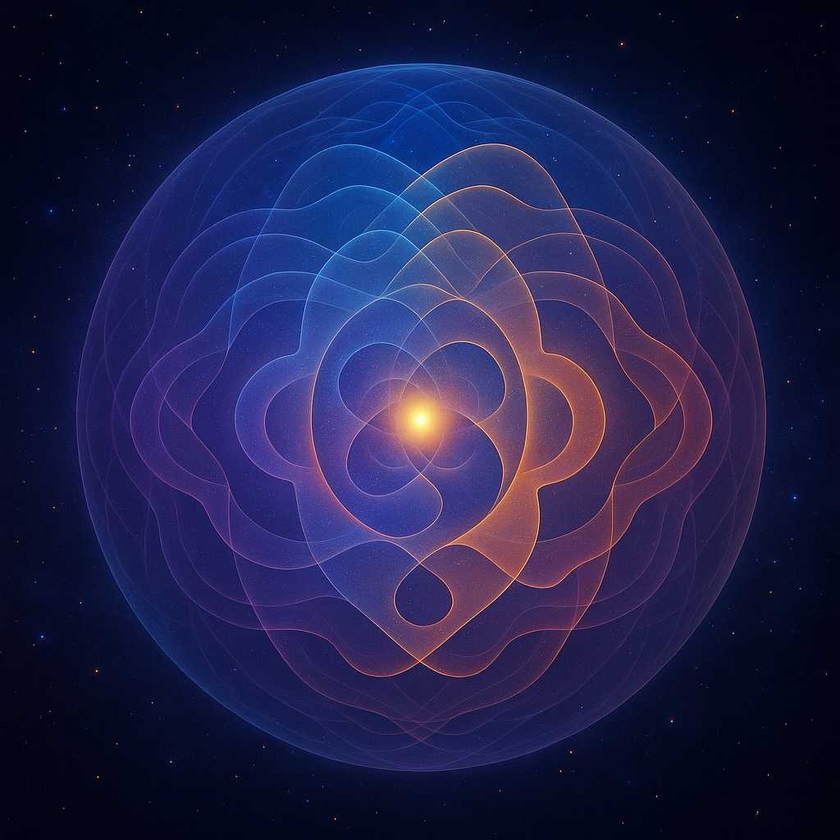
We have never been so connected, and perhaps never so much in need of relationship. The opposite of loneliness is not constant communication, nor the endless multiplication of contacts, but resonance: the encounter between living beings whose inner worlds remain distinct and yet become capable of vibrating together.
Solitude and relationship are not opposites. Solitude gives us back the time in which we can hear ourselves; relationship gives us the space in which we can truly hear another. We need solitude in order to rediscover our own interiority, because only those who possess an inner world can genuinely open it to another. Only those who know silence can truly listen; only those who no longer need an audience can truly encounter another living being.
Between solitude and relationship lies consciousness: the place where the “I” does not disappear into the crowd, but becomes aware of itself deeply enough to open to the “You.” And when this encounter is founded on presence rather than performance, on listening rather than validation, on vulnerability rather than display, something new can emerge: the “We.”
This “We” is not the dissolution of individuality into a collective mass. It is resonance without loss of identity. Two strings can resonate precisely because they remain two: neither becomes the other, yet the vibration of one awakens a corresponding vibration in the other. Relationship, at its deepest, may work in much the same way. It creates something that neither being could produce in isolation.
And perhaps the circle must be widened still further. The “You” need not be exclusively human. Once consciousness learns to recognise value beyond the boundaries of the self, the other can become another living being — human or non-human — encountered not as an object, a resource, an audience or an instrument, but as another expression of life.
Technology can multiply connections, accelerate communication and transmit an almost infinite number of words, images and signals. But connection is not communion. Technology can bring beings into contact; it cannot, by itself, create the inward presence through which contact becomes relationship. That transformation belongs to consciousness.
Perhaps this is why joy, unlike happiness, cannot be entirely solitary: it begins when the self ceases to seek an audience and discovers another living being. From that discovery, the boundaries of belonging can gradually expand — from the Self to the Other, from the Other to Us, and from Us to Life.
I → You → We → Life.